Shoe Trees and Leather Care: The Cheapest Upgrade You Own review
Cedar shoe trees, a horsehair brush and rotation between pairs do more for how your shoes look and last than any amount spent on the shoes themselves. Leather care is a small habit with compounding returns — and the whole kit costs less than one mediocre pair.
What we like
- Trees preserve shape and pull moisture out after every wear
- Rotation lets leather dry properly — the single biggest longevity factor
- Brushing after wear prevents most of what polish exists to fix
- Resoleable shoes plus this routine turn footwear into a durable good
Flaws but not dealbreakers
- A daily-ish habit, which is harder to sell than a product
- Silicone quick-shine products offer instant gloss and slow damage
- None of it rescues glued shoes whose soles were always the expiry date
Ask anyone whose leather shoes look good a decade in, and the answer is never a secret product — it is a boring routine, applied since the shoes were new. Footwear care is the rare corner of fashion where the folk wisdom is simply true: shape, moisture and rest decide how leather ages, and all three are cheap to manage. The kit is a pair of cedar shoe trees, a horsehair brush, a tin of conditioner, and polish for occasions — a one-time purchase that then quietly outperforms every future footwear splurge you were considering.
Shoe trees are the piece most people skip and the piece that matters most. Feet sweat into leather all day; leather dries into whatever shape it is left in. A tree inserted after wear holds the shoe's form while it dries, pulling out the creasing that would otherwise set, and cedar adds moisture absorption and a smell considerably better than the alternative. The visible difference between treed and untreed shoes after a year of wear is enough to convert anyone — the toe stays up, the vamp creases stay shallow, the shoe still looks like its own product photo.
Rotation is the other half of the drying story. Leather that never fully dries breaks down early — the fibres want rest between wears. Two pairs alternated do not last twice as long as one pair worn daily; they last longer than that, because each pair always gets its drying day. This is the actual argument for owning a second pair of good shoes, and it is a better argument than any sale.
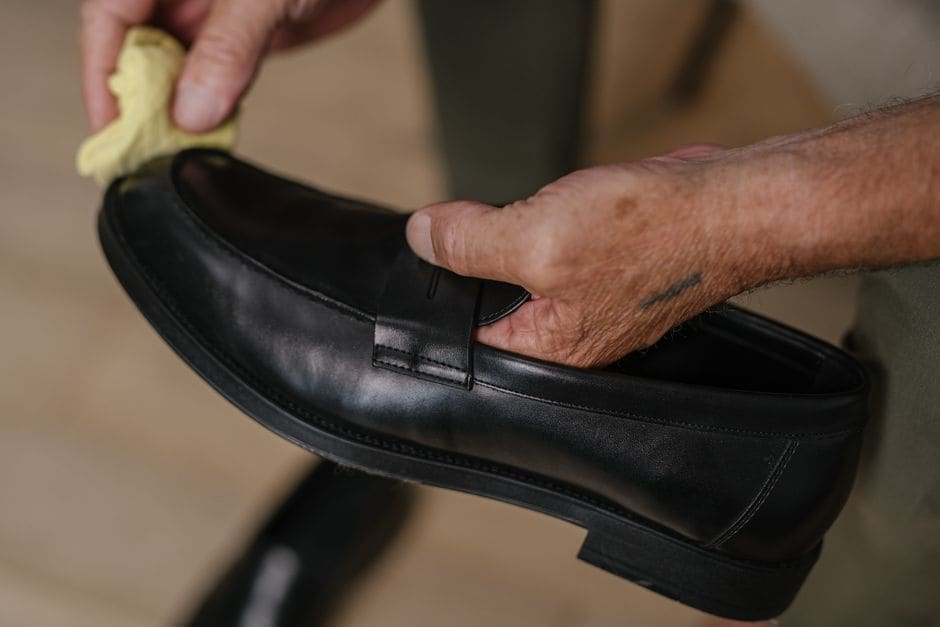
The care ladder is shorter than the internet makes it. Brush after wear — a moment with horsehair removes the dust and grit that otherwise grind into the finish like abrasive. Condition occasionally, when the leather starts looking dry rather than on a calendar, because conditioner replaces the oils that keep leather flexible instead of cracking. Polish is cosmetic and optional: colour, shine, scuff cover. That ordering matters — most people buy polish first and a brush never, which is backwards.
Two warnings earn their place. The silicone-based instant-shine sponges sold at supermarket tills produce gloss now at the cost of the leather later — they seal and dry rather than feed, and serious shoe people avoid them entirely. And care has a ceiling set by construction: a glued fashion shoe dies when its sole does, however lovingly brushed, which is why the routine pairs naturally with welted or otherwise resoleable footwear that can actually cash in the decades the leather now has in it.
The economics land where they usually do in this field: the habit outperforms the shopping. Trees, brush, conditioner and the rotation discipline cost a fraction of one impulse pair — and they are the difference between shoes as a subscription and shoes as property. Buy the trees the same day you buy the shoes; the first evening of wear is when the routine either starts or never does.
Key specs
- Topic
- Footwear care fundamentals
- The kit
- Cedar trees, horsehair brush, conditioner, occasional polish